
Integrating ESG into Executive Compensation Plans
November 2020
Problem statement
The current public health crisis has underscored the need for a holistic view of governance responsibilities, encompassing not just financial metrics but the range of corporate impacts; the crisis will have lasting relevance. As noted in the ICGN Statement of Shared Governance Responsibilities of 23 April 2020, executive remuneration policies and practices are a critical component of these responsibilities.1
Even prior to the current crisis, many capital market participants were questioning whether there was excessive reliance on short-term financial metrics in remuneration plans. In this ICGN Viewpoint we consider afresh such questions. How can remuneration plans of senior executives be structured to promote sustainable value creation? Can this be achieved through including ESG (environmental, social and governance) metrics within their long-term incentive structure?
As sustainability issues by definition focus on the long term, ESG considerations may be foremost considered an appropriate part of long-term incentive plans (often called LTIPs). However, what obligations do corporate leaders have in the short term to align executive compensation with the consequences of corporate decision-making upon employees, customers, suppliers, communities, and the environment? And how may executive remuneration practices and policies present short-term reputational risk?
Here below, we take a look at developments in the public policy landscape of sustainability, some recent research on executive compensation, and corporate commitments towards their stakeholders. We then propose some key characteristics of sound remuneration policies focused on the short-term as well as the long-term and put forward possible engagement questions for investors on this topic.2
Regulatory background
Different geographies and jurisdictions present different market practices of executive compensation.
The regulatory framework in the U.S. can be summed up by the mission of the U.S. Securities and Exchange Commission, which is to protect investors; maintain fair, orderly, and efficient markets; and facilitate capital formation. The SEC’s stated priority-setting primarily focuses on shareholders over other stakeholders, although debate is currently ongoing regarding regulations that could diminish shareholder rights in favor of corporate management.3
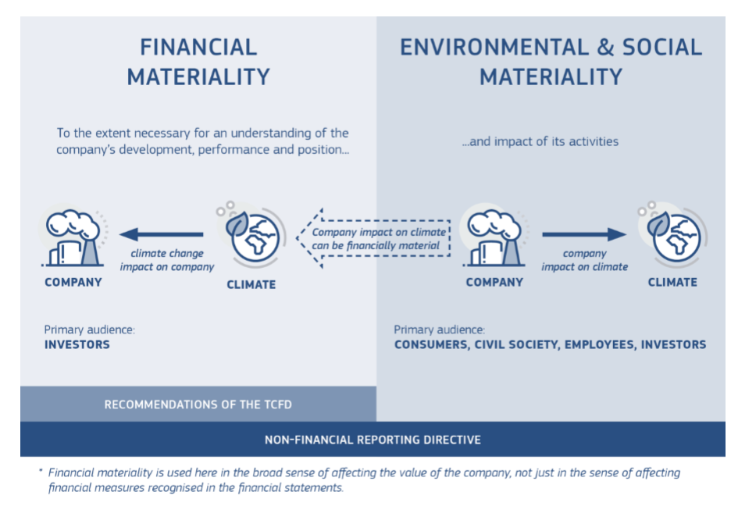
In the European Union (EU), the Sustainable Finance Action Plan is taking center stage. There are several legislative measures, such as the Shareholder Rights Directive II, the European Green Deal, the Sustainable Finance Taxonomy, the Non-Financial Reporting Directive or the Investor Disclosure Regulation that all point to long-term thinking and are pushing corporates and investors alike to serve the benefits of all stakeholders. In the context of non-financial reporting, the EU is making use of the concept of “double materiality”—which takes into consideration not only the effect of ESG factors on a company, but also the company’s broader social and environmental impact.
There are other pockets of long-termism in different jurisdictions as well, such as Canada, South America, Australia or parts of South East Asia, varying in their level of maturity. There is little global alignment of regulators on sound executive compensation, given this geographic diversity as well as differences in ownership structure. However, principles of global best practice can emerge, especially if investors engage with their holdings and vote on remuneration policies to raise the bar.
Views on quantum of remuneration
Against the backdrop of a growing focus on long-term thinking and a multi-stakeholder approach in some regions, general public opinion can be that executives earn exorbitant amounts and are driven solely by short-term goals. Such opinion may be exacerbated in the current crisis where vast numbers of people are without work and large segments of the economy were temporarily shut down.
Some academic analyses challenge the public opinion of executive pay spiraling out of control. Steve Kaplan of the University of Chicago finds that CEO pay in S&P 500 companies declined over 30% in real terms since 2000.4 At the same time, CEO tenures have also declined relative to the 1980s and early 1990s, which suggests that chief executives may be harder to retain or being held to more rigorous standards of performance. According to Kaplan, private company executives with fewer agency problems have increased their total compensation by more than public company executives. He also finds that realized pay is highly related to performance – i.e., there is strong pay-for-performance and that boards do penalize CEOs for poor performance. However, even if one accepts Kaplan’s data and analysis, it begs the question as to whether existing levels of pay may be regarded as inequitable from a broader social perspective.
When governments rush to the aid of businesses to help cushion the overall economic impact of the pandemic, companies can expect to be scrutinised with regard to how they exercise financial prudence5. In some cases, this may call for capping or voluntarily reducing total realised6 executive compensation throughout the ranks. Maintaining or increasing executive pay, particularly when the broader workforce is reduced or facing pay cuts, could threaten stakeholders’ trust and motivation, and in extremis, a company’s social license to operate. As such, COVID-19 has the potential to invigorate a debate about high levels of executive compensation and its impact on income inequality and society’s capacity to respond to global emergencies. Shareholders themselves are placed in a difficult position if they are expected to be the arbiters as to what is a socially acceptable level of pay. But this is a role that a company’s remuneration committee and board should assume, and investors should be prepared to challenge companies and boards when executive pay levels lack clear justification.
Some companies have announced deferral of executive compensation or cuts in fixed executive compensation. Even if these measures may be merely symbolic, they send a signal to key stakeholders internally and externally that company management is not insensitive to the impact of a significant global economic slowdown on the everyday lives of employees, suppliers and others.
It should be noted that not all companies believe they need to increase the total reward of the executive team to attract the right talent. For example, a Dutch bank currently majority-owned by the government has capped reward levels significantly below industry median. Its nomination committee has stated that executive remuneration quantum has not held them back from finding and appointing competent leaders.
Structures to guide long-term incentives
Incentivising long-term performance is easy to advocate, but much more difficult to realise in practice. This theme has provoked much creative thought and discussion, as well as differing models of pay. For example, some may feel that long-term term incentive plans are intrinsically challenged in seeking to identify and quantify the most relevant performance metrics that will remain material for an individual company over the medium to long run. This has prompted some consideration of simply granting incentive payments as annual share awards, perhaps in the form of restricted stock–with a long-term holding requirement that could even extend beyond the executive’s employment in the company itself—a concept called “career shares”. In that way the executive is exposed to the long-term performance of the company, good or bad, in a way that is not tied to specific performance indicators – whose relevance could diminish or change over time. While this approach has some intellectual appeal, however, not many companies have taken up this approach, and many investors remain focus on incentives with defined performance conditions and metrics.
Hence in the remainder of this Viewpoint, we focus on more traditional pay structures, and how to achieve a long term perspective. In part this involves linking ESG factors to the structure of LTIPs and the performance measures they are tied to, along with clawback or malus measures.
First, we need to consider what may be the most relevant ESG factors that incentive plans should be tied to – and from whose perspectives these should be assessed. Excessive reliance on short-term financial metrics – some of which may be obsolete – in remuneration plans no longer go unnoticed. Both incentive structures and the most appropriate metrics to guide long-term incentives are closely examined by investors. There is growing recognition of the difficulty of setting appropriate multiyear performance targets in long-term incentives plans, in a changing and often unpredictable world. We believe that a move towards longer-term incentives is now needed, and that this will require a multi-stakeholder focus.
So what are the drivers that are material to the long-term, sustainable value of the enterprise?
ESG metrics, whose ‘non-financial’ label sometime creates confusion because their impacts may not appear in financial results in the short term, have the potential to impact the bottom line of the business in the mid or longer term. This can be through reputational damage, other risk-laden decision-making, or the actual interruption of business continuity. The focus should be on materially relevant ESG issues, including an explanation of how these have been defined and whether the company has been tracking its performance on these factors for a few years before tying their compensation to it. It is important to incorporate sustainability-related performance factors that the executive team can be held accountable for and directly influence. This requires looking beyond the current crisis and proactively considering such factors as climate risk and inclusion policies.
Companies in the same sector often operate in a common set of circumstances; therefore, they are often best positioned to explain what these relevant ESG issues are. Materiality is a clear priority in assessing which ESG metrics are most relevant in remuneration structures. There is no single set of metrics that is universally applicable. These will differ by company and industry circumstances. A helpful starting point, both for investors and boards, is provided by the Sustainability Accounting Standards Board and its materiality map.7 Another concept has been presented by the European Commission in its 2019 Guidelines on reporting climate-related information8, defining ‘double materiality’, visualized in the figure below. This points out that what is material from an ESG perspective encompasses both how ESG risks and opportunities impact the company and how the company impacts its external environment and society. This approach is more aligned with the materiality principle embedded in the Global Reporting Initiative’s Sustainability Reporting Standards9.
Sustainability data is becoming more abundant, although as yet many listed companies fail to report meaningfully on their most relevant ESG issues. That said, ESG data is becoming better, more usable and more actionable. Some consider consistency is still a major issue, but several initiatives in this space are addressing that, as well.
Investor stewardship
In line with Principle 6 of the ICGN Global Stewardship Principles10, investors should promote long-term value creation and integration of ESG factors. Investors should build awareness of factors that may affect a company’s long-term prospects, including an understanding of the investee company’s business model and strategy and how ESG factors may influence risks and opportunities affecting a company’s long-term performance and sustainable value. Investors should consider ways to analyse, monitor, assess and integrate ESG-related risks and opportunities as part of their approach to stewardship and, in particular, in their monitoring, voting and engagement practices.
Investors should encourage companies to link ESG and other qualitative factors more clearly with company strategy and operations, and ultimately long-term value creation. If a company’s ESG disclosures are insufficient to allow for investors to gain an appropriate understanding of a company’s sustainability-related risks, investors should encourage more robust ESG reporting.
Some specific ideas in practice
In principle competent executives generally do what they are paid to accomplish. The inclusion of ESG metrics in their long-term incentives is intended to influence their behavior to ensure that material ESG issues are addressed. This may include tying annual bonuses to ESG-related metrics, such as customer satisfaction or occupational health and safety (OH&S) performance.
As Seymour Burchman of the Semler Brossy Consulting Group wrote in the Harvard Law School’s Corporate Governance Forum in early 2020 that long term incentives should be designed around the mission of the company, rather than the strategy.11 Focusing on this “ North Star” gives a clear indication of the direction, yet it allows for flexibility on the ‘how’. It enables long-term transformation, allows for agile course corrections in a setting that benefits stakeholders. In order to come up with the right metrics for the company, corporate leaders should engage with their shareholders and stakeholders. In the context of the growing focus on long-term value creation, it is not surprising that a growing number of shareholder proposals focus on linking executive compensation to sustainability metrics.
Some promising examples can be found across industries, in particular in the extractives industries where there is a concern for workplace safety. Burchman writes that measures such as employee satisfaction or Net Promoter Score (NPS) can be useful indicators in some industries to consider for the LTIP. He cites studies by Alex Edmans at the London Business School and Rob Markey at Bain & Company showing that companies with high employee satisfaction NPS materially outperform their peers.12
The pay ratio of the CEO to median employees can be a helpful indicator, but this ratio will also vary by sector13 and can also have perverse effects if the company chooses to outsource the lowest paying jobs to artificially inflate the median pay. The percentage of annual increase of the total compensation including bonuses, pension contributions and other fringe benefits of top executives compared to that of the median employee can be a useful metric as well.
To drive truly long-term thinking, the performance assessment period for LTIPs needs to move beyond three years and be expanded at least to five years, if not longer. The current approach of annually approving a three-year goal means that there are often three sets of three-year goals in place at any moment in time (the latest and the previous two). This can cause a tension between the objectives of the overlapping plans.14
Tying the LTIP measures to the mission of the company and moving to an end-to-end cycles enables management to be more flexible about the path they adopt to meet their established goals, which become progressively more ambitious (gateways) while the performance metrics remain the same. This approach holds executives accountable instead for stable long-term, outcome-based goals. Combining this with a share ownership requirement by executives that they need to hold for a number of years even after leaving their office should also help to drive long-term planning and thinking.
We agree with Burchman’s assessment that “the specifics of the mission on the front end tie nicely to the specifics of incentive pay on the other. Tying long-term incentives to the mission also allows a new, natural balance between annual and long-term incentives in influencing executive behavior. Short-term achievements can be rewarded in annual bonus plans and long-term outcomes in long-term plans.”15
In addition to ESG-related metrics in the LTIP, well-crafted clawback and malus provisions are measures that can help increase focus on sustainability issues, including possibly serving as a “gateway” or precondition for receiving incentive payments. Often a sustainability related omission or controversy hits the reputation of a company before it may impact its bottom line. Compensation clawbacks can be a measure in place that punishes sustainability-related wrongdoing after the fact while malus gives a negative bonus for poor performance – thereby incentivizing focus on meeting and surpassing targets. In the below table we list a few examples of how ESG factors can be linked to pay.
Illustrative examples of ESG links to pay
| Company | Measure | Outcome |
| Prudential | Diversity and inclusion in the executive ranks (5% target by 2021) | |
| Royal Dutch Shell | Setting and meeting carbon emission reduction target: annually review and set a 3-5 year target | Weighed 10% of LTIP dependent on meeting target (upon 2020 AGM approval) – achieved through the engagement with the Climate Action 100+ |
| PayPal and Equifax | Clawback16 for reputational harm, caused by an action or omission of an employee, possibly linked to ESG impacts and controversies. The policy can apply to current and former employees at different ranks of seniority. | |
| Companies in the materials, energy and utilities sectors17 | Linking executive pay to mitigating Occupational Health and Safety (OH&S) risks | Incentivizing executives to have robust policies on OH&S risks and ensure their rigorous implementation. |
| Danone | Employees sustainable engagement Fulfilment of climate ambitions | Focus on employee engagement, a relevance factor in all industries. Ensuring public commitments on climate change mitigation are met. Some measures are applicable to over 1500 senior managers. |
| Multiple European asset managers | Linking bonuses to successful ESG engagements with portfolio companies | Entering dialogues with investee companies and putting investors’ ESG concerns on the map with the aim to influence management’s approach to relevant ESG issues. |
| Companies complying with the 2018 UK Corporate Governance Code | Remuneration schemes should promote long-term shareholdings by executive directors that support alignment with long-term shareholder interests. Share awards granted for this purpose should be released for sale on a phased basis and be subject to a total vesting and holding period of five years or more. The remuneration committee should develop a formal policy for post-employment shareholding requirements encompassing both unvested and vested shares. | |
| Siemens | Long-term stock award tied to new “sustainability index”, based on three equally weighted metrics: “reduction of CO2 emissions, the number of training hours per employee – in particular due to the challenges posed by digitalization – and the Net Promoter Score for measuring customer satisfaction” | |
| Unilever | Sustainability Progress Index weighs 25% in the LTIP | An annual progress report is published, capturing the assessment of Unilever’s Board Corporate Responsibility and Compensation Committees on performance on the Unilever Sustainable Living Plan, CO2 reduction, sustainable palm oil use and others. |
Sample engagement questions investors can address to companies
- What are the top three environmental, social or governance considerations of your company?
- (How) have you engaged with key stakeholders to determine these? Who are the key stakeholders? Where is the process documented? How often is this consultation repeated?
- How many of these ESG considerations are part of the strategic outlook of the company for the next 5 years? For the next 10 years?
- Can you define opportunities for balancing long-term value creation, short-term strategic agility, and the building of stakeholder ecosystems all at the same time?
- How does the company’s mission and its board-level narrative on sustainability issues get translated into robust governance of these issues, a clear strategy, risk (and opportunity) management as well as metrics and KPIs?
- What are the company-wide KPIs related to these issues?
- Do you have a long-term incentive plan in place? What are the relevant ESG-related performance metrics and gateways for these? What is the evaluation and vesting period for it?
- How you approach setting well-fitting multiyear performance targets in long-term incentives plans, in a changing — and sometimes unpredictable – world?
- Do executives have a share-ownership requirement? What multiple of their annual fixed salary is this? What’s the time-frame after their appointment that they need to reach this level? What is the holding period requirement after cessation of their executive role?
- How do you entice ownership of environmental, social and governance issues in company governance and among directors, executives and employees?
- What makes your disclosure on these issues credible and reliable?
- How are these issues integrated in the compensation packages of executives and others?
- What are your three- and five-year targets regarding integrating sustainability in the remuneration and what is the roadmap to get there?
- What help would you welcome from the investment community on this?
- Do you benchmark your current remuneration practices against peers (also in the context of the pandemic)? How do you know which peers to look at for best practice?
References:
- ICGN Guidance on Non-Executive Remuneration (2016): http://icgn.flpbks.com/icgn_non-exec-dir-remuneration_2015/#p=1
- EU Guidelines on Reporting Climate-related information https://ec.europa.eu/finance/docs/policy/190618-climate-related-information-reporting-guidelines_en.pdf
- ICGN Viewpoint: COVID-19 and Capital Allocation. April 2020. https://www.icgn.org/sites/default/files/ICGN%20Viewpoint%20COVID-19%20and%20Capital%20Allocation_0.pdf
- ICGN Global Stewardship Principles (2020): https://www.icgn.org/sites/default/files/ICGN%20Global%20Stewardship%20Principles%202020_0.pdf
- Seymour Burchman, Harvard Law School Corporate Governance Forum (2020): A New Framework for Executive Compensation https://corpgov.law.harvard.edu/2020/03/13/a-new-framework-for-executive-compensation/
- Steven Kaplan, University of Chicago: Executive Compensation and Corporate Governance in the U.S.: Perceptions, Facts and Challenges: https://www.nber.org/papers/w18395
ICGN Viewpoints
ICGN Viewpoints are produced by Secretariat and by our member-led Policy Committees. While not defining a formal ICGN position on the subject, they provide opinion on emerging corporate governance issues and are intended to inform and generate debate. This ICGN Viewpoint was written by Richard Bennett, a former member of ICGN’s Board of Governors and Eszter Vitorino Füleky, a member of ICGN’s Board Governance Committee.
We welcome dialogue with the ICGN Secretariat and/or Committee members, as follows:
Gigi Dawe, Co-chair, ICGN Board Governance Committee: gdawe@cpacanada.ca
Carola van Lamoen, Co-chair ICGN Board Governance Committee: c.van.lamoen@robeco.nl
George Dallas, ICGN Policy Director: george.dallas@icgn.org